

I've gone through more cheap wallets than I care to count. Tri-fold nylon wallets that blew out at the seams inside of a year. Pleather bifolds that started peeling at the corners before I'd even broken them in. Wallets that looked fine in the package and looked like garbage six months later.
When I finally sat down and made my own full grain leather wallet in my Alabama workshop, everything changed. That wallet didn't just hold up — it got better. The leather darkened, developed a patina that told the story of every road trip, every job site, every handshake. It became something with character.
That's the difference between a full grain leather wallet and everything else on the market: mass-produced wallets age out, full grain leather ages in. This guide is going to explain exactly what makes full grain leather the gold standard, what to look for when you're shopping for one, and why a handmade wallet built by a single craftsman is something worth investing in.
What Is Full Grain Leather, Really?
Not all leather is created equal. Walk into any department store and you'll see words like "genuine leather," "top grain," and "bonded leather" thrown around like they're interchangeable. They're not. There's a real hierarchy here, and full grain sits at the top of it.
The Leather Grades Explained
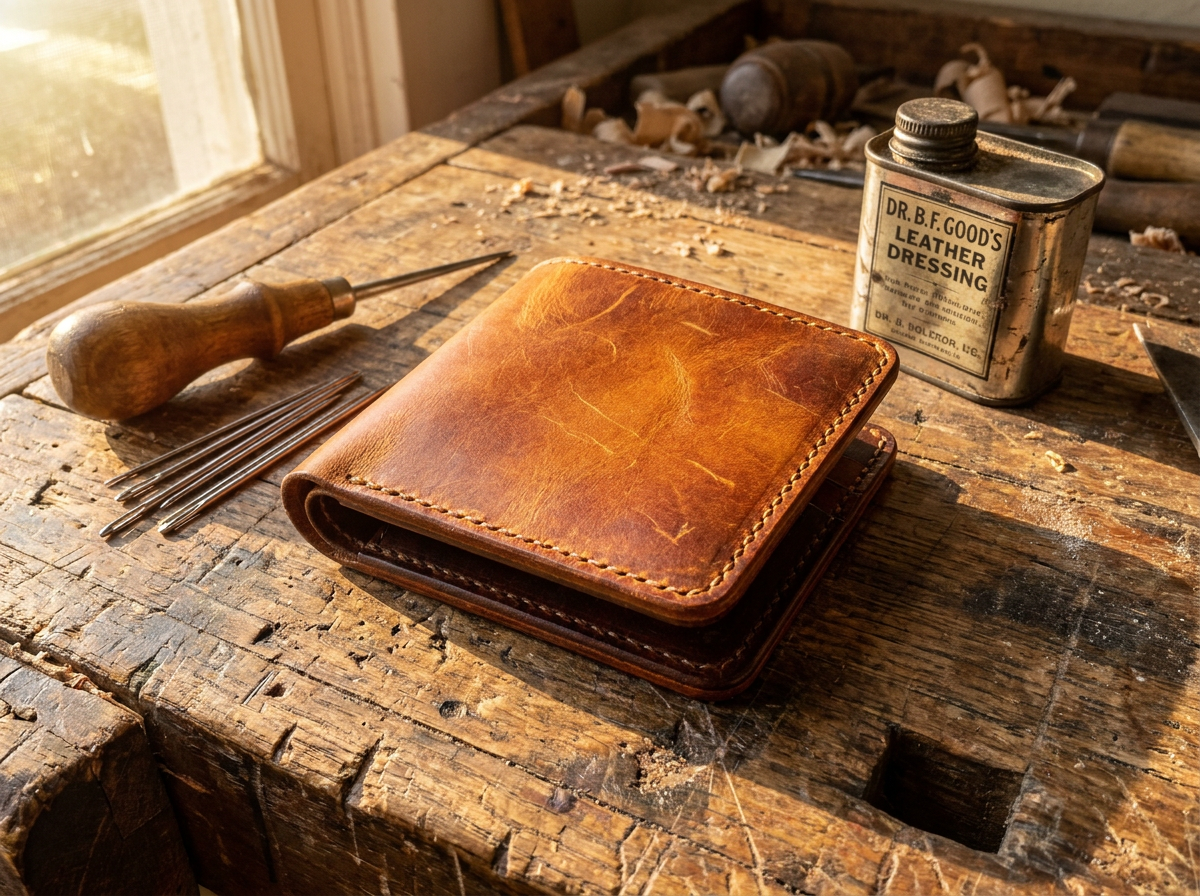
Full Grain Leather is the outermost layer of the hide, left intact with all its natural grain and markings. Nothing has been sanded down or buffed away. It retains all the tight, dense fibers of the original hide, which is exactly what makes it so strong and durable. Small natural variations — a tiny scar here, a slight color shift there — are part of the material, not flaws to be ashamed of. Those marks are proof you're looking at the real thing.
Top Grain Leather has been sanded to remove imperfections and then embossed with a uniform grain pattern. It looks cleaner, but that sanding removes the toughest layer of the hide. It's still decent leather, but it won't age the same way and won't hold up as long.
Genuine Leather is the industry's most misleading term. It sounds like a quality claim, but it actually just means the product contains some portion of real leather — often lower layers of the hide glued and bonded together. It will crack, peel, and fall apart in a matter of years, sometimes months.
Bonded Leather is essentially leather scraps and fibers mixed with polyurethane and pressed together. If you've ever owned a couch cushion that started flaking after two years, that's bonded leather. It has no place in a wallet.
When I source leather for Fox Tree Creations wallets, I use exclusively full grain from trusted American suppliers like Springfield Leather Supply and Tanners Row. I turn away anything with grade inconsistencies. The leather you get in one of my wallets is the real deal — the same grade used by bootmakers and saddlers for generations. (The Art of Manliness has a great breakdown of leather grades if you want to dig deeper into the differences.)
Why Full Grain Leather Wallets Last a Lifetime
The question I get most often at vendor markets is: "How long will this actually last?"
My honest answer: longer than you'll want to stop using it.
Full grain leather is structurally dense in a way that other leathers simply aren't. The tight fiber structure resists moisture, abrasion, and stress better than anything that's been sanded or corrected. A well-made full grain leather wallet, properly cared for, will outlast a dozen genuine leather alternatives. Many people pass them on to their kids.
The Patina Effect
Here's the thing that people who've never owned real leather don't expect: the wallet you carry every day will look better five years from now than it does when you first pull it out of the box. That's the patina. The oils from your hands and pocket, exposure to light, and the natural oils you apply all deepen the color and create a surface finish that's completely unique to you and your life.
A cheap wallet looks its best on the shelf. A full grain leather wallet looks its best after years of use. That's the difference in philosophy between mass-produced and handmade.
Construction Quality Matters Too
Great leather is necessary but not sufficient. The construction determines how well the wallet holds together long-term. At Fox Tree Creations, I saddle-stitch every wallet by hand — that means two needles, one thread, each stitch locked independently. If one stitch breaks (which is rare), it doesn't unravel the rest. Compare that to machine stitching, where a single broken stitch can cascade and cause the seam to fail.
I also use edge painting and burnishing on exposed leather edges, which seals the leather and prevents delamination or fraying over time. These are the details that separate a wallet made to sell from a wallet made to last.
What to Look for in a Full Grain Leather Wallet
There's no shortage of people calling their products "full grain leather." Here's how to separate the real from the rest when you're shopping.
Check the Grain Pattern
Real full grain leather has a natural, slightly irregular grain pattern. Pores vary in size. There may be slight color variations. If every inch of the leather looks identical and perfectly uniform, there's a good chance it's been corrected or embossed — meaning it's top grain at best.
Smell It
I know that sounds odd, but full grain vegetable-tanned leather has a distinct, natural, earthy smell. Genuine leather and bonded leather tend to smell chemical or plasticky. Your nose knows.
Test the Thickness
Full grain leather used for wallets is typically 2–3 oz (roughly 0.8–1.2mm thick). It should feel substantial without being stiff. Too thin and it won't hold its shape. Too thick and it won't break in properly. The weight should feel purposeful.
Minimalist vs. Bifold: Which Style Is Right for You?
This is a personal choice, but here's my take:
Minimalist card wallets are for the guy who carries 3–5 cards and maybe some folded cash. They're slimmer, sit flatter in your front pocket, and tend to look more streamlined. They're also easier to make well, because there's less opportunity to cut corners.
Bifold wallets are the classic. More card slots, a full cash pocket, sometimes an ID window. They're thicker but more organized. If you carry more than five cards or regularly handle cash, a bifold is probably right for you.
At Fox Tree Creations, I make both. Either way, the leather quality and construction are identical.
The Real Difference Between Handmade and Mass-Produced
I want to be direct about this, because it matters.
When you buy a wallet from a major retailer — even one marketed as "full grain leather" — it was almost certainly made in a facility that produces thousands of units a day on an assembly line. Each step is handled by a different machine or worker. No single person ever sees the whole wallet. Quality control is statistical, not individual.
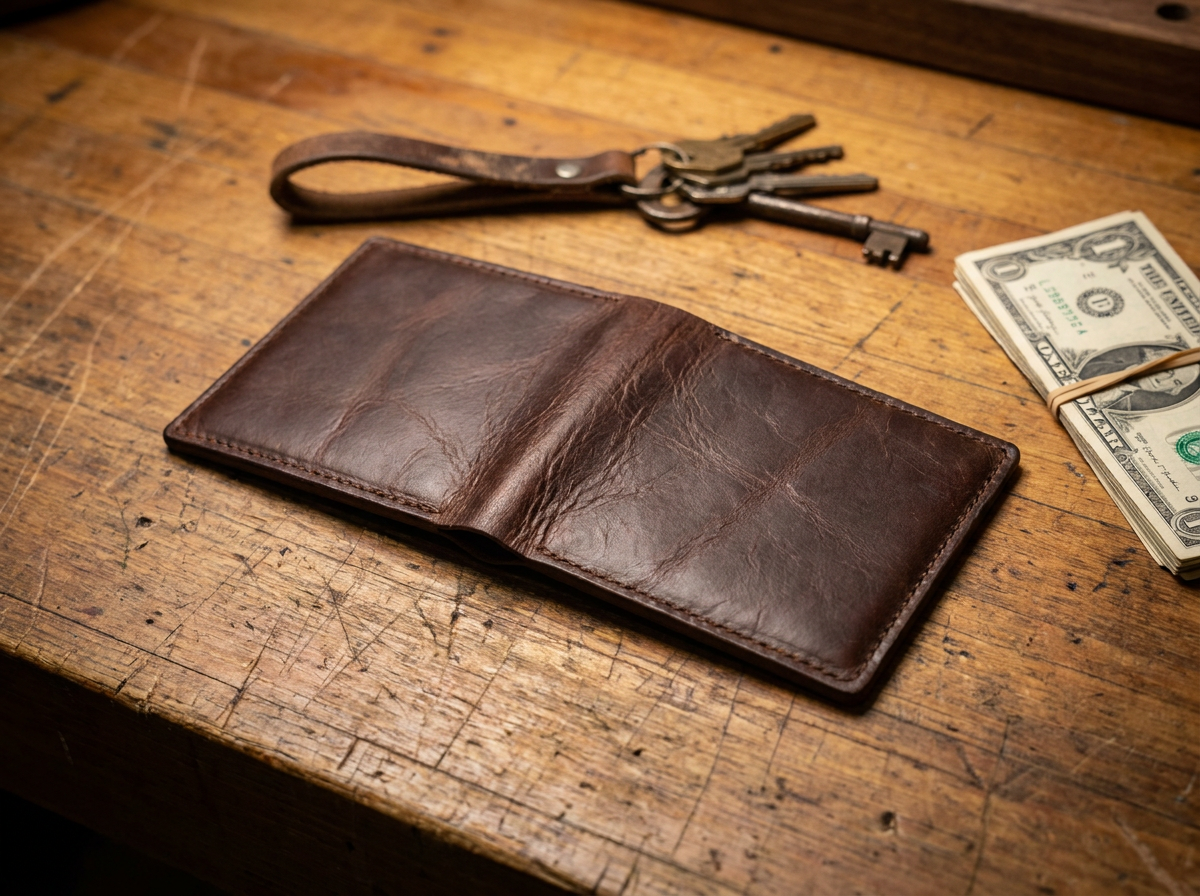
When you order a wallet from me, I cut that leather myself. I stitch it myself. I finish the edges myself. I inspect it before it ships. If it doesn't meet my standard, I don't send it — I toss it and start over. That has happened. It will happen again.
That's not a marketing claim. That's just the reality of being a one-man shop in Alabama where every order matters.
Why Small-Batch Matters for Leather
Leather is a natural material that requires hands-on attention. The grain direction, the thickness of the specific hide, the humidity in the shop that day — all of these factors affect how the leather behaves when it's cut and stitched. A craftsman working with leather every day develops an instinct for these variables that no machine can replicate.
Mass production addresses this by standardizing everything down to the lowest common denominator. Handmade production addresses it by paying attention.
I pay attention. Every single order.
Why a Personalized Leather Wallet Makes the Perfect Gift
If you've been looking for a leather gift for men that isn't generic — something with actual weight and meaning behind it — a personalized leather wallet is one of the best options out there.
Here's why it works:
- It gets used every day. Unlike a gift that ends up on a shelf, a wallet is in his pocket 365 days a year. He'll touch it hundreds of times.
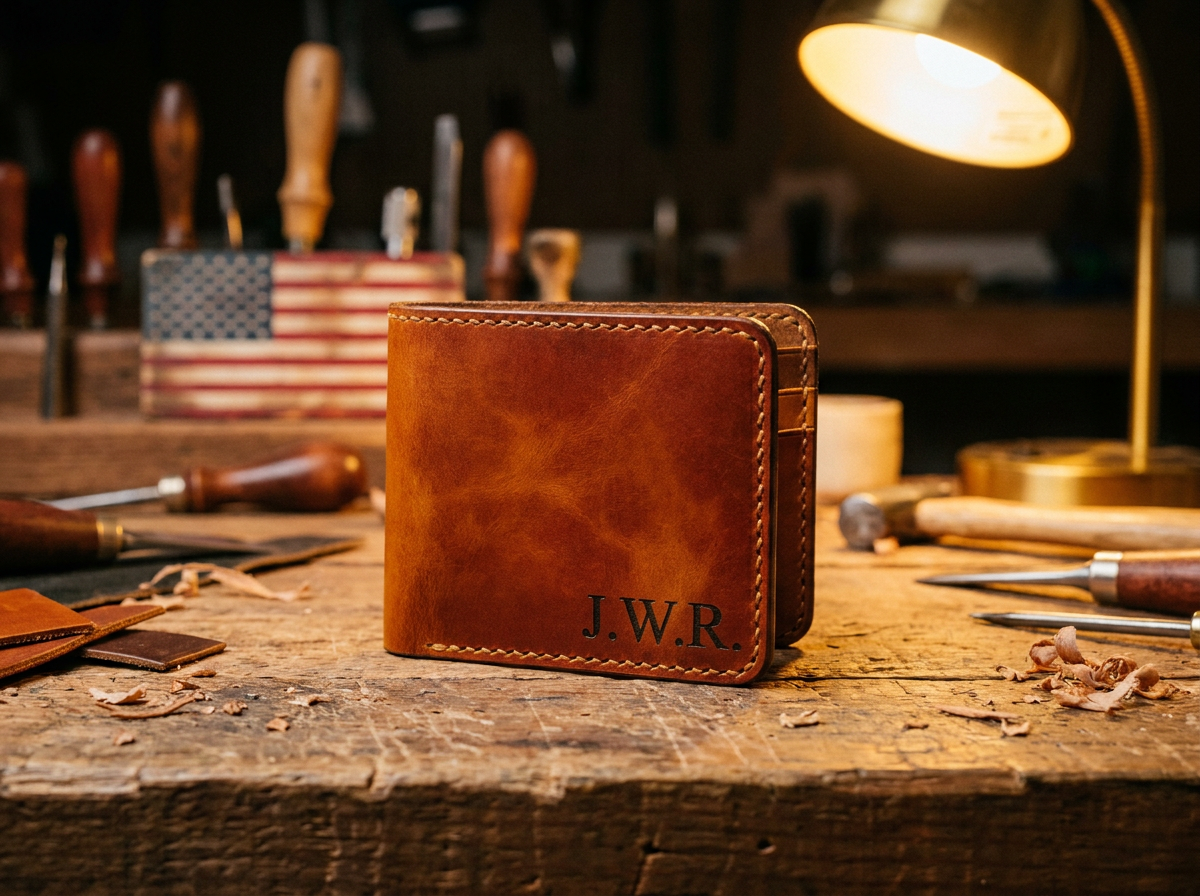
- Personalization makes it permanent. Laser-engraved initials, a name, a date, a symbol — these aren't stickers or decals. The engraving is burned into the leather and will be there as long as the wallet is.
- It communicates something. A handmade personalized wallet says: I thought about you. I picked something real. I didn't grab the first thing in my Amazon cart.
I can engrave virtually anything on a wallet — initials, names, meaningful dates, simple symbols, short phrases. The laser engraving I do at Fox Tree Creations is permanent and clean, and it complements the natural beauty of the leather rather than masking it.
How to Care for Your Full Grain Leather Wallet
One of the questions I get asked a lot is: how do I take care of it? Good news — full grain leather is low-maintenance compared to what people expect. But a little care goes a long way toward that lifetime guarantee I stand behind.
Condition It Every Few Months
Full grain leather benefits from periodic conditioning to keep the fibers supple and prevent cracking. I personally use Neatsfoot oil on all my leather goods — it's traditional, it penetrates well, and it doesn't change the color dramatically. Aussie leather conditioner is another excellent option that's easy to find and easy to apply.
You don't need to condition often. A light application every three to six months is plenty for a wallet carried in a pocket.
Keep It Dry (Mostly)
Full grain leather handles moisture better than lower grades, but you still want to avoid soaking it. If your wallet gets wet, let it dry naturally away from direct heat — don't throw it in the dryer or near a heater. Heat dries the leather fibers out quickly, which can cause cracking. After it dries, apply a small amount of conditioner to replenish moisture.
Don't Overstuff It
I know this sounds obvious, but a wallet stuffed with 15 cards and a week's worth of receipts will stretch and distort over time, even with quality leather. Carry what you need. A well-designed wallet with 5–7 cards and a few folded bills will hold its shape and develop that beautiful patina without distortion.
Let the Patina Develop
This is the most important care instruction: just use it. The natural oils from your hands are actually good for the leather. The wear patterns that develop over time tell the story of your daily life. Don't try to keep it looking brand new — embrace the character. That's the whole point.
For more detailed leather care guidance, Real Men Real Style has a solid resource on full grain leather characteristics and long-term care.
What Makes Fox Tree Creations Wallets Different
I've been honest throughout this post about what makes full grain leather the right choice and what to look for in a well-made wallet. Let me be equally honest about what I do at Fox Tree Creations and why I believe it matters.
Only Full Grain, Always
I don't use anything else. Not top grain. Not genuine leather. Every wallet I make starts with full grain vegetable-tanned leather sourced from quality American suppliers. That's non-negotiable.
Made to Order, One at a Time
I don't keep finished wallets in stock. When you place an order, I make your wallet. That means it's cut from fresh leather, assembled from scratch, and finished by the same hands that will package it and write out your thank-you card. Production time is typically 5–7 business days, and I think that wait is worth it.
Permanently Personalized
The laser engraver I use — an xTool D1 Pro — produces clean, sharp, permanent engravings on full grain leather. I do a digital mockup before I ever fire up the laser, and I send it to you for approval before production starts. What you see is what you get, and what you get is permanent.
Backed by a Lifetime Durability Guarantee
I stand behind every wallet I make. If something fails due to a defect in materials or workmanship, I'll make it right. That's not a marketing line — it's how I'd want to be treated as a customer, so it's how I operate.
Ready to Own the Last Wallet You'll Ever Buy?
You can keep buying cheap wallets every year or two and replacing them when they fall apart. Or you can make one decision, invest in something built to last, and never think about your wallet again — except to notice how good it looks ten years from now.
Browse the full collection of handcrafted leather wallets at Fox Tree Creations — minimalist card wallets, bifolds, personalized options, and more. Every piece is made to order from full grain leather in my Alabama workshop.
Want something completely custom? Visit the Fox Tree Creations shop and reach out directly. I do custom engravings, custom sizing, and custom designs. If it can be done in leather, let's talk.
This is the one you keep. Make it count.
Jason Arnett is the founder and sole craftsman at Fox Tree Creations, an Alabama-based leather goods and laser engraving studio. Every piece is made to order from full grain leather using a blend of traditional techniques and modern laser engraving technology.

0 comments