

I've watched a man walk into a job interview holding a flimsy, peeling vinyl folder, and I've watched another walk in with a worn-in leather portfolio that looked like it had been through a few wars. Nobody said a word about either one. They didn't have to. The folder spoke first.
A good leather portfolio is one of those quiet purchases that tells people who you are before you open your mouth. It carries your resume, your contracts, your notes, your signature. And if you pick the right one, it will carry them for twenty years.
I'm Jason, and I make leather goods by hand in my Alabama workshop. I've cut, stitched, and burnished enough portfolios to know what separates a keeper from a throwaway. This guide is the straight version: what to look for in a leather portfolio, why full grain leather matters, and how to spot a cheap one from across the room.
What Is a Leather Portfolio (and Is It the Same as a Padfolio)?
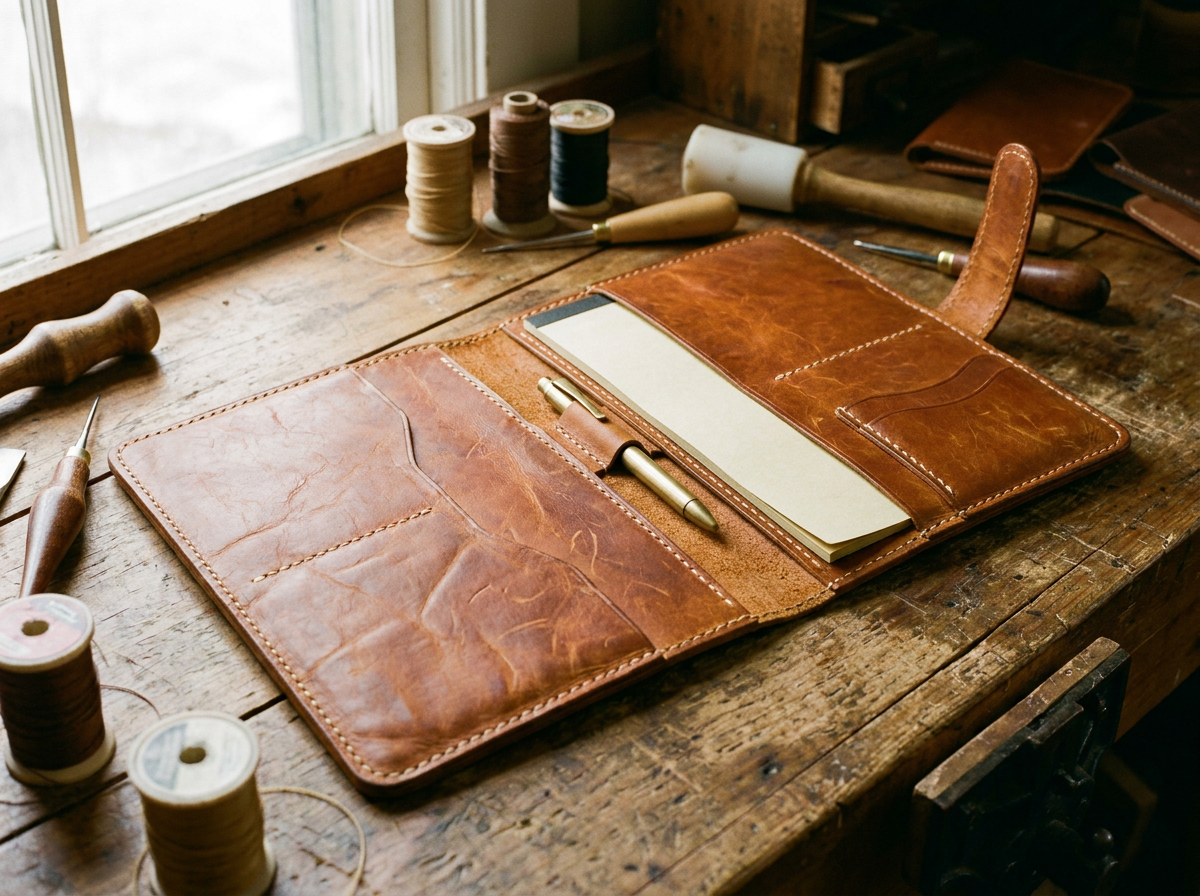
People use the words leather portfolio and leather padfolio interchangeably, and honestly, that's fine. Both describe a folding case, usually zippered or open-faced, that holds a writing pad, pen, and loose documents. A portfolio tends to be the bigger, more structured cousin. A padfolio is often a little slimmer and built around a legal pad or notebook.
Here's what a proper one typically includes:
- A notepad holder or sleeve for a legal pad or notebook
- A pen loop that actually holds a pen
- Card slots for business cards
- A document pocket for resumes, contracts, and receipts
- A sturdy spine that doesn't collapse when you set it down
That's the basic anatomy. What changes everything is what it's made from and how it's put together.
Who Actually Needs a Leather Portfolio?
More people than you'd think. Over the years, the folks who ask me about a leather portfolio for men fall into a few groups.
The Job Seeker
You're walking into an interview. You want to look prepared, and you want something to do with your hands. A clean leather portfolio holding a fresh copy of your resume says "I take this seriously" without a single word.
The Business Professional
Meetings, client lunches, site visits. If you take notes by hand, a leather business portfolio keeps everything in one place and looks sharp on a conference table next to a laptop.
The Graduate
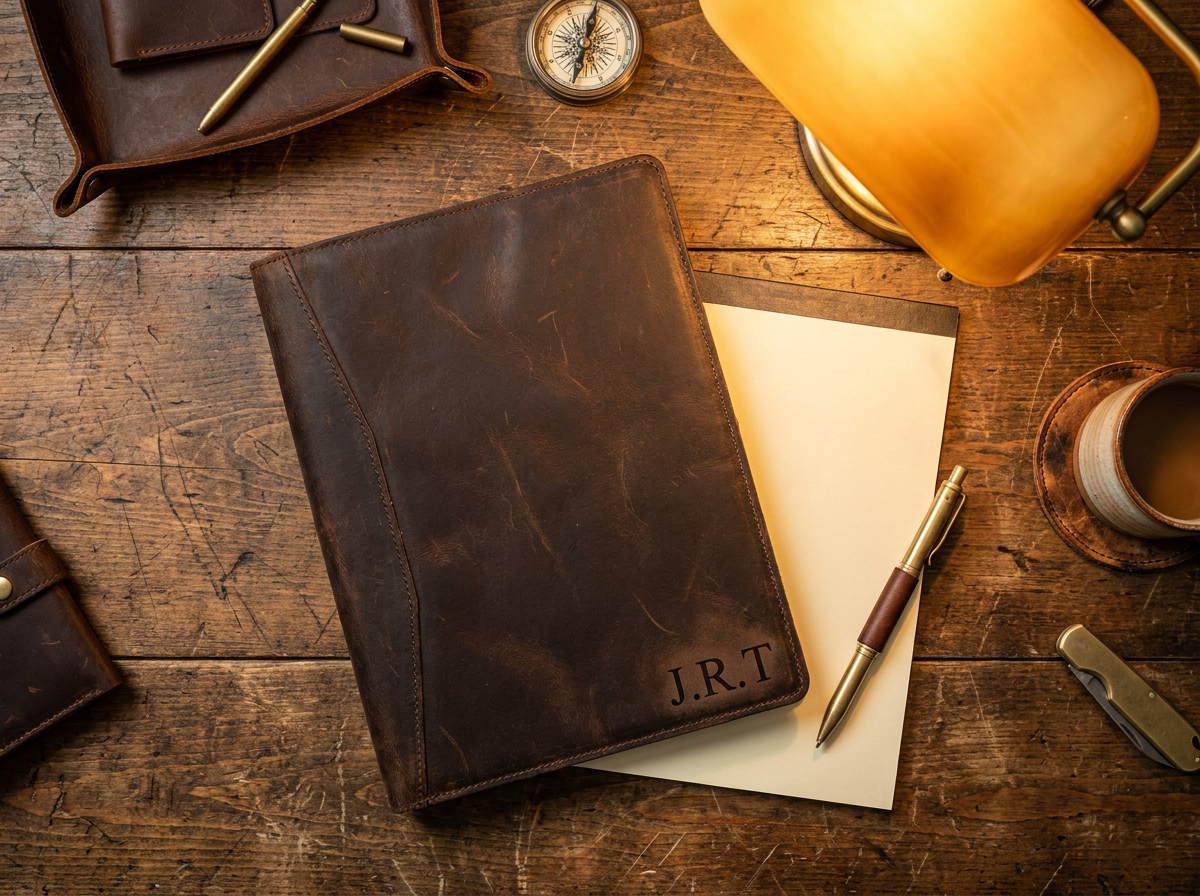
Graduation is the classic moment for this gift. A personalized leather portfolio with initials engraved on the cover marks the step from school into work. It's the kind of thing a graduate keeps long after the diploma is framed.
The Tradesman and Small Business Owner
Estimates, invoices, permits, customer notes. A rugged leather portfolio holds up in a truck cab far better than a cardboard folder. I run a one-man shop, so I know the value of a place to put paperwork that doesn't fall apart by spring.
The Man Who Already Has Everything
Yes, he exists. A handmade portfolio with his name on it is practical, personal, and not something he'll find on a clearance rack.
Full Grain Leather: The Only Material Worth Buying
This is the part I feel strongest about. Not all "genuine leather" is equal, and that label is one of the most misleading in the business.
Full Grain Leather
This is the top layer of the hide with the natural surface left intact. It's the strongest, most durable part of the animal, and it develops a rich patina as you use it. Scratches blend in. Color deepens. It looks better at year ten than it did on day one. This is the only leather I use at Fox Tree Creations.
Top Grain Leather
The surface is sanded or buffed to remove imperfections, then often finished with a coating. It's decent, but you lose some of the strength and character of full grain.
"Genuine" Leather
Here's the one that trips people up. "Genuine leather" is real leather, but it's usually the lower layers of the hide, often corrected, embossed, and sprayed to look nicer than it is. It tends to crack and peel. If a portfolio costs less than a steak dinner and says "genuine leather," you already know how that story ends.
Bonded and Faux Leather
Scraps glued together or plastic with a pattern pressed in. They flake within a year or two. Skip them.
If you want to read more about how leather is graded and tanned, the folks at Tandy Leather have long-running educational resources for makers and buyers. It's where I got my own start learning the craft.
What Makes a Leather Portfolio Last: Construction Details
Leather quality is half the equation. The other half is how it's built. When I look at any portfolio, here's what I check first.
Stitching
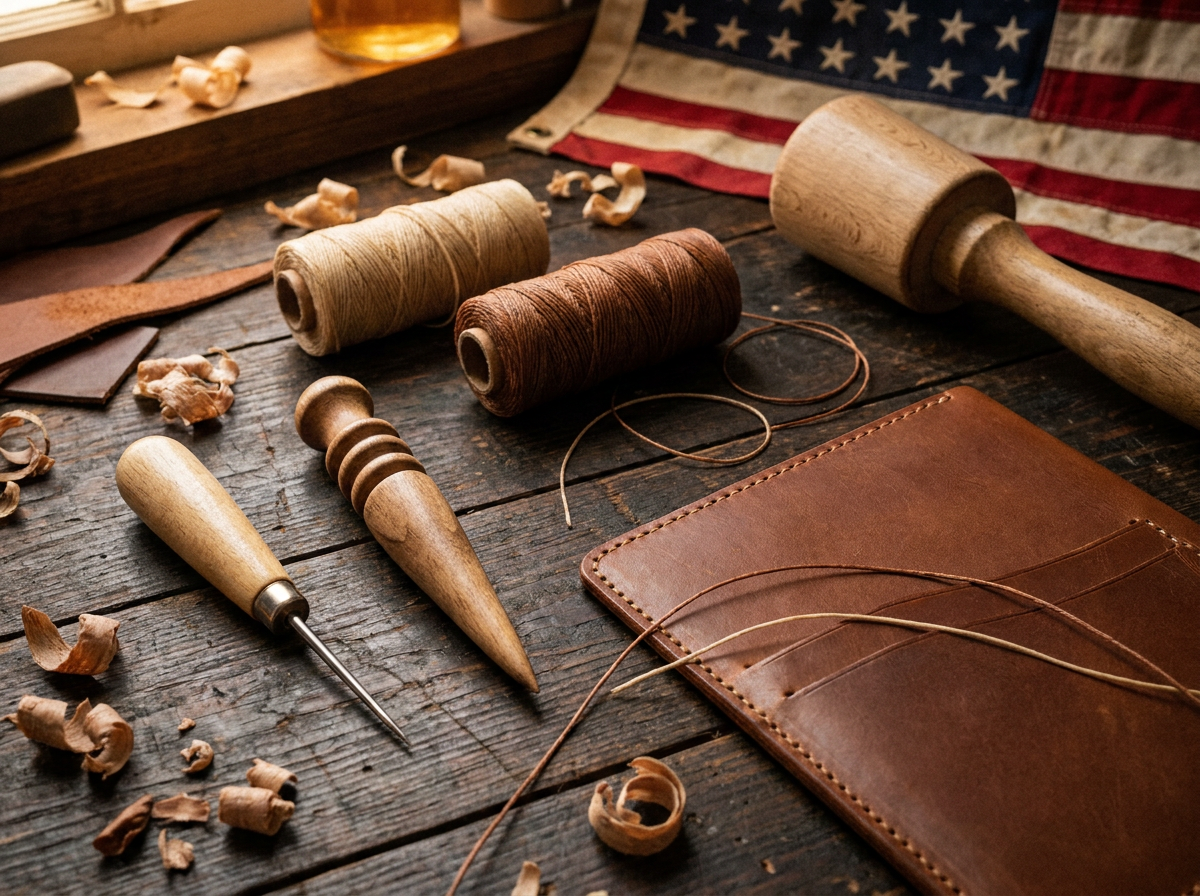
Hand-stitched or well-machined stitching with strong waxed thread matters. Look for even, tight stitches with no loose ends. Stitching is where cheap portfolios fail first, because the thread gives out long before the leather does.
Edges
Raw, fuzzy edges are a tell. A quality portfolio has edges that are sanded, painted or burnished smooth. Burnishing compresses the fibers with friction and a little water or gum, leaving a clean, glossy edge that resists fraying. It's slow work, and it shows.
Lining and Pockets
The inside matters as much as the outside. Pockets should be cut square, stitched securely, and deep enough to actually hold a document. A pen loop that's too loose or too tight is a daily annoyance.
Hardware
If there's a zipper, it should run smoothly and feel substantial. Brass and heavy-duty metal hold up. Thin plastic does not.
Finish and Conditioning
I hand-rub my leather goods with Neatsfoot oil, which feeds the fibers and brings out the warm amber tones. A finished piece should feel supple, not stiff or plasticky.
How to Choose the Right Leather Portfolio
Before you buy, run through these questions. They'll save you from a purchase you regret.
1. What Size Do You Really Need?
Most people carry standard letter-size paper (8.5 x 11 inches) or a smaller notepad. Measure what you actually carry. A portfolio that's too big is a pain on a crowded desk, and one that's too small forces you to fold your documents.
2. Zipper or No Zipper?
A leather portfolio with zipper keeps everything contained, which is great if you're tossing it in a bag or truck. An open-style portfolio is faster to access and slimmer. Think about how you'll use it. If you're constantly walking between meetings with loose papers, go with the zipper. If it lives on a desk, open is fine.
3. What Color Fits Your Life?
Dark brown is the workhorse. It hides wear, pairs with nearly everything, and ages beautifully. Black is formal and clean. Lighter tan tones show the patina most dramatically over time. I'm partial to warm browns, but pick what you'll be proud to set on a table.
4. Do You Want It Personalized?
Engraving turns a nice portfolio into your portfolio. Initials, a full name, or a short line are the usual choices. Because I use a laser, the engraving is permanent. It doesn't peel, fade, or wash off like a stamped-on label.
5. Who Made It, and Will They Stand Behind It?
Ask where it was made and by whom. A maker who can tell you the story of the piece is usually a maker who cares. I make every item to order, and I back my work with a lifetime durability guarantee.
Leather Portfolio vs. Cheap Alternatives: The Real Cost
Let's talk money, because that's what stops most people.
A big-box faux leather portfolio runs maybe $20 to $30. It looks fine out of the package. In eighteen months it's cracking at the spine, the zipper is sticking, and you're shopping for a replacement. Do that three or four times over a decade and you've spent more than a single quality piece would have cost, and you still don't have anything you'd be proud of.
A handmade full grain leather portfolio costs more up front. It's also the last one you'll buy. That's not a sales line. It's just how leather works. Done right, it improves with age instead of falling apart.
I like the math behind buying once. Fewer things in the landfill, fewer trips to the store, and something in your hands that carries a story.
Personalized Leather Portfolios as Gifts
Searching for a gift that isn't another gadget? A custom leather portfolio is a solid answer for a lot of occasions.
Graduation Gifts
New grads are about to start interviewing and meeting people who matter. A monogrammed portfolio is practical and feels grown-up.
Retirement and Work Anniversaries
Someone who has spent decades in a career deserves something better than a pen set. A portfolio with their name and years of service engraved is a gift that sits on a desk or shelf with pride.
Father's Day and Birthdays
Dads are famously hard to shop for. Give him something he'll use daily, with his initials on it.
Christmas and the Holidays
It's mid-October as I write this, and holiday orders are already coming in. Because every piece is made to order, I'd recommend ordering early to make sure it arrives in time. Production typically runs 5 to 7 business days, and you can change your personalization until I begin work on your piece.
Pair It With Something Else
A portfolio pairs well with a handcrafted leather wallet for a matching set, or with one of our engraved tumblers for a complete desk-and-daily-carry gift. Browse the full lineup at Fox Tree Creations and you'll find bundles built for exactly this.
How a Handmade Leather Portfolio Is Built
People ask what actually goes into one, so here's the short tour of my bench.
Choosing the Hide
It starts with the leather. I order a specific grade from trusted U.S. suppliers so every piece comes out consistent. Leather is the biggest cost in my business, and I'm fine with that. It's the one place I refuse to cut corners.
Cutting and Pattern Work
Every panel gets cut by hand against a pattern. I inspect the hide as I go, because natural leather has marks and grain variations. That's part of what makes full grain special, and I place each cut so the best part of the hide ends up where it shows.
Stitching and Assembly
Pockets, pen loops, and the spine are stitched with strong waxed thread. This is slow, patient work, and it's where a portfolio earns its reputation for lasting.
Edge Finishing
Edges are sanded, painted or burnished, and polished until they feel smooth under your thumb. Rush this step and you can see it from a mile away.
Laser Engraving
This is where modern tools meet old craft. My xtool laser etches your initials or design right into the leather. It's precise, permanent, and clean. Before I ever engrave your piece, I send a mockup so you can approve exactly what it will look like.
Conditioning and Inspection
I hand-rub the finished piece with Neatsfoot oil, then inspect every stitch. If something isn't right, it doesn't ship. I send photos of finished custom orders before they go out the door, because I want you to know what's showing up on your porch.
How to Care for Your Leather Portfolio
Good leather is low maintenance, but a little attention goes a long way. Here's what I tell every customer.
Condition It Occasionally
Once or twice a year, work a small amount of Neatsfoot oil or a quality conditioner such as Aussie Leather Conditioner into the leather with a soft cloth. A little goes a long way. Too much will darken and soften it more than you want.
Keep It Away From Heat and Soaking
Don't leave it on a dashboard in an Alabama July. Heat dries leather out. If it gets wet, let it air dry naturally. Never use a hair dryer or heater.
Wipe, Don't Scrub
A dry or slightly damp cloth handles most dirt. Skip harsh cleaners.
Embrace the Patina
Scuffs, darker spots where your hand rests, a softer feel over time. That's not damage. That's the leather telling the story of how you've used it. If you want to understand more about responsible leather sourcing, the Leather Working Group publishes standards on environmental practices in leather production.
Leather Portfolio Buying Checklist
Print this out or screenshot it before you shop.
- Material: Full grain leather, not "genuine," bonded, or faux
- Stitching: Even, tight, and made with strong thread
- Edges: Smooth and sealed, not raw or fuzzy
- Layout: Notepad holder, pen loop, card slots, and a document pocket
- Size: Fits the paper or notepad you actually carry
- Closure: Zipper or open style that suits how you work
- Personalization: Permanent engraving, not a sticker or stamp
- Maker: Someone who stands behind it with a real guarantee
Frequently Asked Questions About Leather Portfolios
What is the best leather for a portfolio?
Full grain leather. It's the strongest, most durable grade, and it develops a rich patina rather than wearing out.
How long does a quality leather portfolio last?
With basic care, a well-made full grain portfolio can easily last twenty years or more. Cheap faux versions often fail in under two.
Can I get a leather portfolio personalized?
Absolutely. Initials, a full name, or a short custom line can be laser engraved permanently into the leather. That's one of the best parts of ordering from a small shop.
What is the difference between a portfolio and a padfolio?
Mostly just naming. A padfolio usually centers on a writing pad and is a bit slimmer, while a portfolio can be larger with more document storage. Both are folding leather cases for papers and notes.
Is a leather portfolio worth the money?
If you carry documents regularly, yes. You'll buy it once instead of replacing a cheap one every couple of years, and it looks better the longer you own it.
How long does a custom order take?
Most pieces from my shop take about 5 to 7 business days, since each is made to order. Changes to your personalization are welcome until production begins.
Why I Build Leather Portfolios the Slow Way
I could buy cheaper leather. I could outsource the stitching. I could skip the hand-finishing and ship faster. Plenty of folks do, and I don't fault them for trying to make a living.
But I started this shop because I believe in making things that last. Faith, freedom, and hard work aren't just words on a tumbler to me. They're how I run my bench. Every piece that leaves my workshop is one I'd be proud to carry myself, and that's the standard I hold it to.
When you buy from Fox Tree Creations, you're not buying from a warehouse. You're buying from one man in Alabama who cut, stitched, finished, and inspected your piece by hand, and who will answer your email personally if something isn't right.
Ready for a Leather Portfolio You'll Actually Keep?
If you've read this far, you know what to look for. Full grain leather. Honest stitching. Clean edges. A maker who stands behind the work.
Head over to foxtreecreations.com to see what's on the bench right now, or start with our handcrafted leather wallets if you want a matching piece for everyday carry. Have something specific in mind, like a size, a color, or a custom engraving? Send me a message and I'll sketch up a mockup for your approval before I cut a single piece of leather.
Built by hand. Made to last. Proudly Alabama.

0 comments