

I'll be honest with you — I wasn't always the kind of guy who carried a notebook everywhere. Then I started making them. Or more accurately, I started making the covers that make you want to carry one everywhere.
A leather field notes cover is one of those things that sounds like a small detail until you actually have one in your pocket. Then it becomes the kind of thing you reach for without thinking, the same way you grab your wallet or your keys. It's not just a cover. It's the piece that turns a $.99 pocket notebook into something you're proud to pull out in a meeting, at a job site, or at a coffee shop where someone's going to ask you about it.
I make these by hand in my Alabama workshop — every stitch, every cut, every piece of full grain leather. And I've learned a few things along the way about what makes a great leather field notes cover and what makes one that falls apart in six months. This post is going to walk you through all of it.
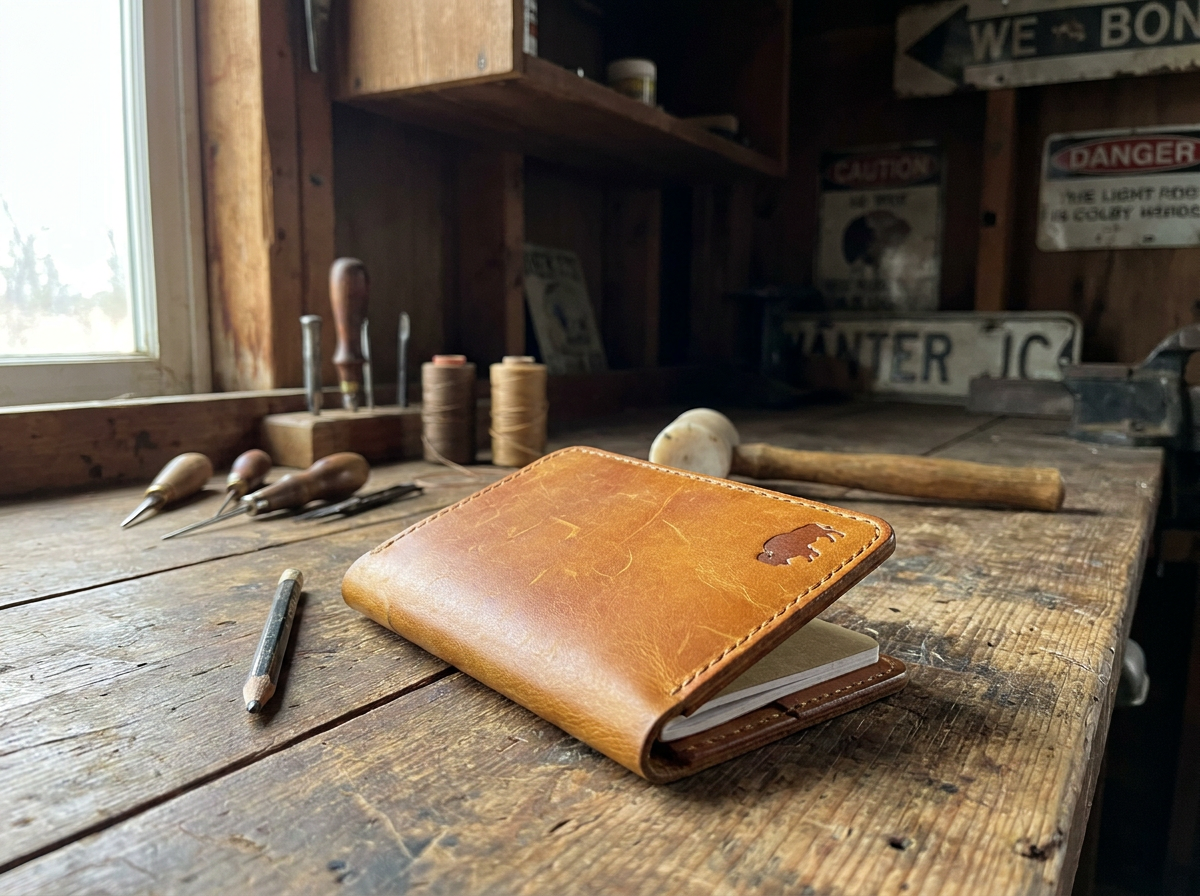
What Is a Field Notes Cover — and Why Do You Need One?
Field Notes notebooks are the gold standard for pocket notebooks — small, durable, and designed to fit in a back pocket. The problem? The paper covers aren't built to survive daily carry. They get bent, scuffed, and worn out within a few weeks of real use.
A field notes cover solves that problem. It wraps around your notebook — or a stack of two or three — and protects it while adding structure and grip. A good leather cover also holds a pen, tucks in a card or two, and develops a rich patina over time that plain paper never could.
But not all covers are built the same way. The difference between a cheap imitation leather journal cover and a real full grain leather field notes cover is the difference between something that cracks after one winter and something your kid inherits.
Who's This For?
A leather notebook cover isn't a luxury item. It's a working tool for people who take notes seriously — contractors, project managers, craftsmen, hunters, ranchers, students, writers. Anyone who reaches for a pocket notebook during their day.
It's also a genuinely great gift. If you know someone who keeps notebooks but doesn't have a leather cover yet, you're about to become their favorite person.
Why Full Grain Leather Is the Only Material Worth Using
This is where I'll get a little particular, because it matters.
There are three main grades of leather you'll encounter when shopping for a leather journal cover or leather notebook cover:
- Full grain leather — the top layer of the hide, with all the natural grain intact. Strongest, most durable, develops a beautiful patina. This is what I use.
- Top grain leather — sanded and buffed to remove imperfections. More uniform looking, but weaker because the strongest fibers have been removed.
- Bonded or genuine leather — basically leather scraps glued together and pressed onto a backing. Looks fine in photos, cracks and flakes within a year of actual use.
Full grain leather is more expensive, and it should be. You're paying for a material that gets better with age, not worse. Every scratch becomes character. Every crease tells you where that cover has been. After two years of daily carry, a full grain leather field notes cover looks richer, more worn-in, and more personal than the day you got it.
A bonded leather cover looks worse every single month.
When I make a leather field notes cover at Fox Tree Creations, I'm using veg-tan full grain leather sourced from American suppliers. I cut it by hand, saddle-stitch it with waxed thread, and finish the edges by hand. There's no shortcut that doesn't show up eventually.
What to Look for in a Leather Field Notes Cover
If you're shopping for a leather field notes cover — whether from me or anyone else — here's what actually matters.
1. Fit and Sizing
Field Notes notebooks measure 3.5" x 5.5". Your cover needs to fit that size snugly without being so tight it stretches when you open it or so loose the notebook slides around. A well-made cover will hold the notebook firm but let it open flat with no resistance.
If you use Moleskine Cahier, Rite in the Rain, or other pocket notebooks, check sizing before ordering — standard field notes covers may not accommodate all brands without modification.
2. Stitching Quality
Stitching is the single easiest way to tell quality leather craftsmanship from cheap production. Look for:
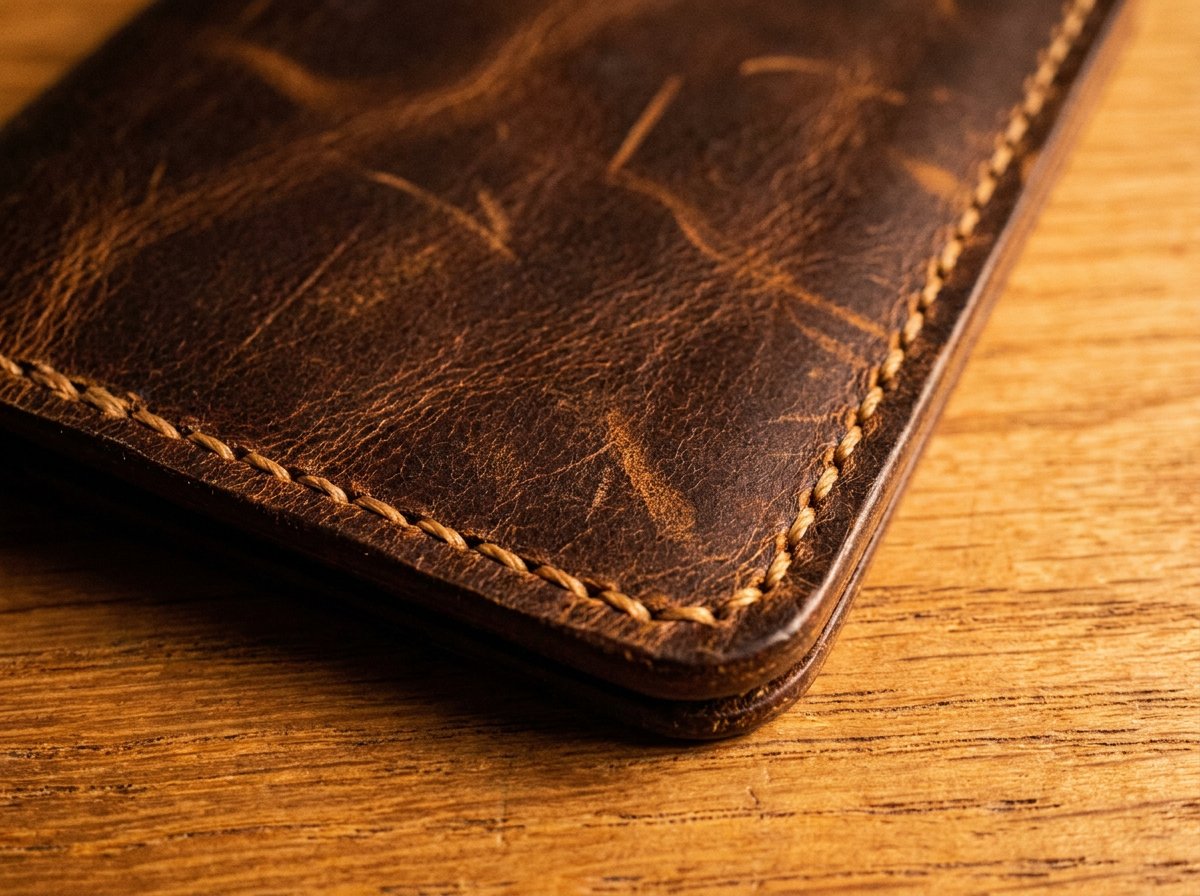
- Saddle stitching — done by hand with two needles, far stronger than machine stitching. If one thread breaks, the rest holds.
- Even spacing — consistent stitch length shows attention to detail and proper tooling.
- Waxed thread — protects the stitch from moisture and wear over time.
Machine-stitched leather goods look fine at first. Over time, a single broken stitch can unravel a whole seam. Saddle stitching doesn't do that.
3. Personalization Options
A custom leather notebook cover with your initials, name, or a design laser-engraved into the leather is a completely different object than a plain one. The engraving is permanent — it won't wear off, fade, or peel. If you're buying this for yourself or as a gift, personalization turns a nice cover into something genuinely one-of-a-kind.
At Fox Tree Creations, I engrave using a precision laser directly onto the leather. You can add initials, a full name, a meaningful date, a custom design, or even a short message on the inside. Browse the full shop to see personalization options.
4. Extra Features
Think about how you actually use a pocket notebook before you decide on a cover design. Some things to consider:
- Pen loop or pen holder — keeps your writing instrument attached to the cover. Genuinely useful if you write on the go.
- Card slots — a slot or pocket on the inside can hold a credit card, business card, or ID. Turns your notebook into a lightweight wallet alternative.
- Cash pocket — some designs include a flat pocket inside for folded bills.
- Multi-notebook capacity — some covers hold two or three notebooks at once, useful if you keep separate notebooks for different purposes.
The key is to pick features that match your actual habits. A cover loaded with features you'll never use is just extra weight in your pocket.
The Fox Tree Creations Leather Field Notes Cover
I make two versions — a standard leather field notes cover and one with an integrated pen holder. Both are cut from full grain veg-tan leather, hand-stitched with waxed thread, and available with custom laser engraving.
Here's what's included in every cover:
- Full grain veg-tan leather, hand-cut in my Alabama workshop
- Hand-stitched saddle stitch in matching waxed thread
- Snug fit for standard Field Notes notebooks (3.5" x 5.5")
- Hand-finished, burnished edges — no raw edges, no fraying
- Optional pen holder version available
- Custom laser engraving available (initials, names, designs)
- Ships within 5–7 business days, made to order
These are not mass-produced. I make each one when you order it. That means the leather I'm using hasn't been sitting in a warehouse for two years — it's fresh, properly conditioned, and cut specifically for your order.
If you want to see what a full grain leather wallet from the same workshop looks like, check out the handcrafted leather wallets collection. Same leather, same standards, same hands.
How to Care for Your Leather Field Notes Cover
Full grain leather is durable by nature, but a little care goes a long way.
Regular Conditioning
I recommend conditioning your leather every few months, or any time it starts to feel dry or stiff. My go-to products are Neatsfoot Oil and Aussie Leather Conditioner — both penetrate the leather without leaving a greasy residue or dramatically changing the color.
Apply a small amount with a clean cloth, work it in with circular motions, and let it dry overnight. You'll notice the leather gets a bit richer and darker after conditioning — that's normal and good.
Moisture and Water
Full grain leather can handle light rain and splashes without issue. If it gets genuinely wet, let it dry slowly at room temperature — away from direct heat or sunlight, which can cause it to crack or warp. Once dry, condition it.
Don't panic if your cover gets wet. Leather has been getting wet for centuries. It dries fine.
The Patina Process
Veg-tan leather develops a patina — a darkening and deepening of color — over months and years of use. This is not wear and tear. This is the leather responding to your oils, your environment, and your habits. A well-worn leather field notes cover looks like it belongs to someone. That's the point.
If you want to understand more about the leather care process and what different conditioners do to leather over time, Saddleback Leather has an excellent guide to leather care that goes deep on the subject.
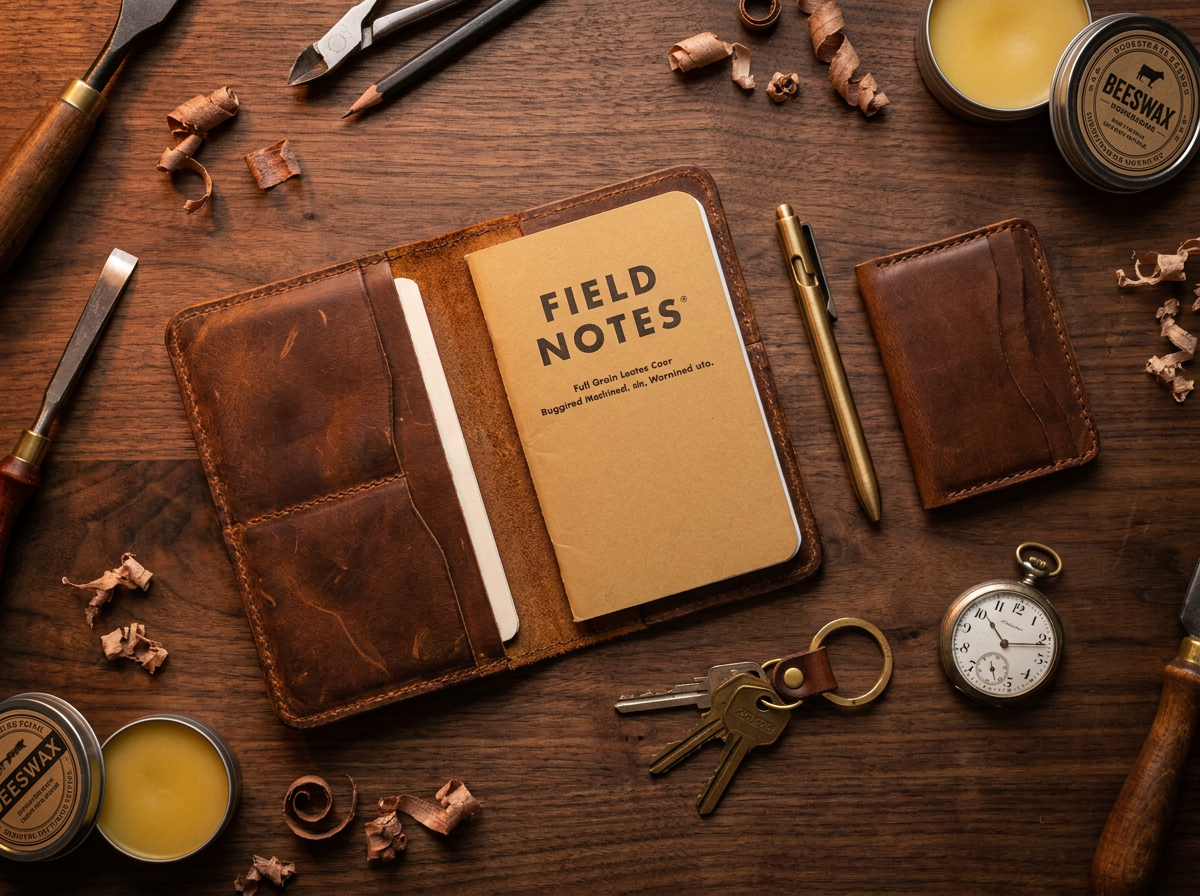
Leather Field Notes Cover for EDC Carry
The EDC community — everyday carry enthusiasts — are some of the most serious buyers of quality leather pocket notebook covers. The logic is simple: if you're going to carry something every single day, it needs to be built to survive that.
A leather EDC notebook cover checks every box:
- Durable enough to take daily abuse without looking worn out
- Slim enough to fit comfortably in a back or front pocket
- Better looking as it ages, not worse
- Functional — holds the notebook secure, holds a pen if you want
- Personal — engraving makes it identifiably yours
A leather pocket notebook cover is one of those pieces that integrates naturally into a well-considered carry setup. It doesn't compete with your wallet or your knife or your keys. It completes the kit.
Why Handmade Beats Mass-Produced Every Time
I'm obviously biased here, but I'm going to make the case anyway.
Mass-produced leather goods are made to a price point. The leather grade gets optimized out. The stitching gets automated. The edges get painted instead of burnished. The hardware gets sourced to cost. Every step is a tradeoff between quality and margin, and the margin always wins.
A handmade leather notebook cover made by an individual craftsman is made to a standard. My standard is: this piece has to be something I'd be proud to carry myself, and something I'd be comfortable putting my name on. That's the whole filter. Does it meet that bar? Yes. Does it not? Start over.
There's also the simple fact of attention. When I make your field notes cover, I'm thinking about that specific piece of leather — where the grain is, where to place the cut to avoid a scar or blemish, how to balance the stitch pattern with the natural movement of the hide. A machine doesn't make those decisions. A craftsman does.
You can feel the difference in your hand. The weight is right. The edges are smooth. The stitching is tight and consistent. None of that happens by accident.
Leather Field Notes Cover vs. Other Notebook Covers: A Comparison
Let's be honest about the market, because there's a lot of noise out there.
| Cover Type | Durability | Looks Over Time | Personalization | Value |
|---|---|---|---|---|
| Full grain leather (handmade) | Excellent — decades | Improves with patina | Yes — engraving, initials | High long-term value |
| Top grain leather (production) | Good — several years | Stable but no patina | Limited | Moderate |
| Bonded/genuine leather | Poor — cracks within a year | Degrades visibly | Usually none | Low |
| Canvas/waxed cotton | Good for light use | Fades and stains | Limited | Moderate |
| Nylon/synthetic | Good — survives abuse | Stays the same (at best) | None typically | Low |
If you're looking for the cover you'll still have in ten years, there's only one category that makes the cut. Full grain leather, made right, is the answer every time.
Frequently Asked Questions
Does the cover fit standard Field Notes notebooks?
Yes. Fox Tree Creations leather field notes covers are sized for standard 3.5" x 5.5" Field Notes brand notebooks. If you're using a different brand of pocket notebook, measure it before ordering or reach out — I can discuss custom sizing.
Can I personalize the cover?
Absolutely. Laser engraving is available on all covers — initials, names, dates, custom designs. The engraving is permanent and won't fade or peel. You choose what goes on it during checkout.
How long does it take to make and ship?
Every cover is made to order. Production takes 5–7 business days, and then it ships from my Alabama workshop directly to you. No warehouse, no middleman.
What if I need a pen holder?
The version with an integrated pen holder is available in the shop. It holds a standard pen or pencil securely and adds minimal bulk to the cover.
Does the leather need to be broken in?
Veg-tan leather is firm when new and softens with use. It's not stiff to the point of being awkward, but it will relax and mold to your notebook over the first few weeks of carry. Think of it like a good pair of boots — it adapts to you.
Will the engraving fade?
No. Laser engraving removes material from the surface of the leather — it's a physical change, not a coating or ink. It cannot fade or peel. The engraved marks will deepen slightly in color as the leather develops its patina, which actually makes them look better over time.
Ready to Get Your Own?
If you've made it this far, you already know what you're looking for. You want something built right, made to last, and personal enough to be worth carrying every single day.
That's exactly what I make.
The Fox Tree Creations leather field notes cover is handcrafted in my Alabama workshop using full grain leather, saddle-stitched by hand, and available with custom laser engraving. It's not mass-produced, it's not pulled from a shelf, and it's not made by someone who hasn't touched every piece that leaves the shop.
Every cover ships within 5–7 business days, made specifically for your order.
Shop the Fox Tree Creations field notes cover and full leather goods collection →
And if you want to see the same full grain leather and craftsmanship in a wallet format, browse the handcrafted leather wallets collection — same standards, same hands, same workshop.
Questions? Reach out directly. I make every piece, so I'm the right person to ask.

0 comments